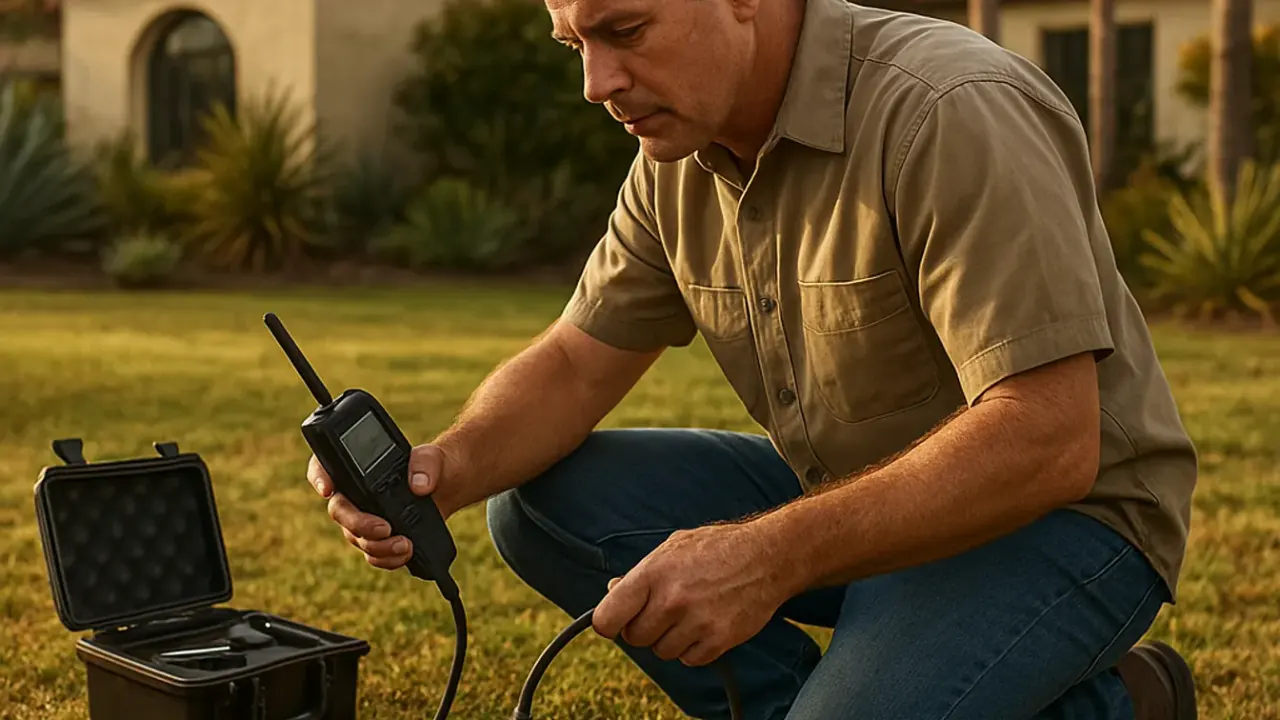
A yard that stays wet for days after the sprinklers have been off is almost always leaking underground, and the water is coming from a supply line, irrigation line, sewer line, or your home's main service line. That answer matters because the fix is different for each one, and guessing wrong can mean tearing up a lawn you did not need to touch. If you live in Santa Ana and your grass squishes when you walk on it in October, you are not imagining it. Below we walk through the exact signs we look for, how detection works, and when it is time to stop digging and call someone.
Why is my yard always wet in Santa Ana CA
Why is my yard always wet in Santa Ana CA comes down to one of four sources: a pressurized water line, an irrigation or sprinkler line, a drain or sewer line, or groundwater that has nowhere to go. In our part of Orange County, the first three cause the vast majority of the wet-yard calls we run.
Underground leak detection is the process of finding where a buried pipe is losing water without digging up the whole yard to do it. We use acoustic listening, thermal imaging, and pressure testing to narrow the leak to a square foot or two before anyone picks up a shovel.
Santa Ana sits on a mix of older clay soils and postwar tract housing, and both matter here. Clay holds water near the surface, so a small leak can keep a patch of lawn green and mushy for weeks before you notice anything inside the house. Homes built in the 1950s and 1960s often still have original galvanized or early copper service lines that have been in the ground for 60-plus years. That is a long time for metal to sit in damp soil.
We also see a spike in wet-yard calls each fall when homeowners finally shut off irrigation for the season. If the ground is still wet a week after the timer is off, that is not the sprinklers. That is a leak.
The underground leak signs Santa Ana CA homeowners should check first
The underground leak signs Santa Ana CA homeowners should check first are the ones you can spot on a walk around the property in about ten minutes. Start at the meter and work outward.
- A wet spot in the yard that does not dry out. One soft, dark patch of grass or dirt that stays damp for 48 hours or more after rain and irrigation are both off.
- A greener strip of grass. A straight line of unusually lush lawn across an otherwise dry yard usually traces a leaking pipe.
- Water pooling in the yard. Standing water in a low spot that was never a low spot before, especially near the meter box or the street.
- The meter keeps spinning. Shut every fixture and irrigation valve in the house, then watch the leak dial on your water meter for 15 minutes. Movement means water is leaving the system somewhere.
- Mud or damp soil along the foundation. A wet band hugging the slab edge points toward a slab or service line leak rather than irrigation.
- A drop in water pressure. If two fixtures running at once now feels weaker than it did last year, the line is losing water before it reaches the house.
Any one of these alone is worth a second look. Two or more together is a strong signal, and it is worth getting a proper look before the damage spreads. For most homeowners, the fastest path is booking professional leak detection Santa Ana CA rather than renting a trencher and hoping.
What a soggy spot in the lawn usually means
A soggy spot in lawn water leak Santa Ana CA calls are almost always tied to one of three lines: the main water service line running from the meter to the house, a lateral irrigation line, or a sewer line. Supply line leaks tend to produce a constant wet patch because the line is under pressure 24 hours a day. Irrigation leaks often show up as a wet zone that only appears when that station runs. Sewer leaks are the ones to take seriously fast, because they carry waste and can undermine soil.
If the wet area sits between the meter box at the curb and the front wall of your house, the service line is the prime suspect. If it sits out in the middle of a planting bed or under a lawn the sprinklers cover, irrigation comes first. If it smells, it is not irrigation.
How to find an underground leak in the yard Santa Ana
How to find an underground leak in the yard Santa Ana starts with isolating the system, and that is the part you can do yourself in an afternoon. Everything after that is where the equipment earns its keep.
- Shut off the irrigation. Turn the controller to off, not just rain delay. Wait 24 hours and recheck the wet spot.
- Do the meter test. With all fixtures and irrigation off, note the reading, wait 15 minutes, and read again. Any movement is a pressurized leak.
- Check the visible stuff. Look at the meter box, hose bibs, the pool equipment pad, and the cleanout for obvious drips or damp soil.
- Mark the wet zone. Stake or flag the edges of the damp area so a technician can compare it against the pipe route.
From there, we bring in tools that do not require digging. Acoustic listening picks up the hiss of water escaping a pressurized line and lets us walk the pipe route until the sound peaks. Thermal imaging shows the temperature difference between wet and dry soil, which is especially useful on slab edges and along the service line. Pressure testing on individual zones confirms whether the leak is on the supply side or the drain side.
For lines that run under concrete or deep under mature landscaping, we use underground leak detection Santa Ana CA methods that pinpoint the break to within a foot or two. That is the difference between replacing one section of pipe and replacing the whole run.
Irrigation and sprinkler leaks versus supply line leaks
Irrigation and sprinkler problems are the most common false alarm we get called out for, and the good news is they are usually the cheapest to fix. A cracked lateral, a failed valve, or a riser broken by a mower will soak a patch of lawn fast. The tell is timing: the wet spot grows right after that station runs and slowly dries when it does not.
Supply line leaks do not care about your timer. They run 24/7, which is why the wet area stays wet through a dry week. If your wet spot survived a full week with irrigation off, you are looking at a pressurized line, and that is when water line leak detection Santa Ana CA is the right call. We test the service line under pressure, listen along the route, and confirm the break location before we open any ground.
Can an underground leak cause sinkholes in Santa Ana
Can an underground leak cause sinkholes in Santa Ana? Yes, and we have seen it happen in yards where a leak ran for months before anyone called. A continuous leak washes fine soil out of the ground and leaves a void behind. When the surface layer finally gives way, you get a depression that can drop a foot or more overnight.
Santa Ana's soil makes this worse in two ways. First, the clay-heavy ground holds water against the pipe instead of draining it away, so the leak keeps eroding the same spot. Second, older neighborhoods have a lot of backfilled utility trenches, and water follows those loose seams. That is how a small leak on a service line turns into a sunken strip running from the meter to the house.
Watch for these before a sinkhole opens up:
- A dip or soft depression in the lawn that was not there last season.
- Soil that feels spongy over a wide area rather than one small patch.
- Cracks in a walkway, driveway, or patio that appeared recently and keep widening.
- A gap opening between the soil and the foundation slab.
If you can see any of those, stop watering the area and get it looked at. A sinkhole in yard water leak Santa Ana California situations is not just a landscaping problem. It can undermine a driveway, a patio, or the soil supporting your foundation, and the repair cost climbs fast once concrete is involved. We handle these calls across leak detection in Floral Park, where the older homes and mature trees make hidden line breaks common.
Common mistakes we see when homeowners chase a wet yard
The mistakes we see most often all come from fixing the symptom instead of finding the source. Each one costs money twice.
- Blaming the sprinklers and turning them down. If the wet spot does not dry out with irrigation off, the timer was never the problem.
- Digging at the wettest spot. Water travels along the trench and pools downhill from the actual break. The wettest dirt is often 10 to 20 feet from the leak.
- Adding drainage. A French drain or dry well installed over a leaking pipe just gives the water somewhere else to go while the soil keeps eroding.
- Waiting for it to show up inside. By the time water reaches your floor or baseboard, it has usually been running for weeks and the repair is bigger.
- Ignoring the meter. The 15-minute meter test is free and settles the question faster than anything else you can do.
One more: homeowners sometimes assume a wet yard is just how the property drains. If the same spot has been wet through two dry summers, it is not drainage. Something is feeding it.
When to call a professional
Call a professional when the meter moves with everything shut off, when a wet spot survives 48 hours with irrigation off, or when you see any sign of soil settling or a new depression. Those three conditions mean water is actively escaping a buried line and the ground is taking damage while you wait.
At Planet Plumbing, we handle this every week across Santa Ana. We locate the leak first, tell you what it is and what the repair costs, then fix it and pressure-test the line before we leave. No exploratory digging, no guesswork, and no surprise line items after the trench is open. If you are also dealing with a pool that will not hold level or a sewer smell in the yard, we can check those on the same visit.
Frequently Asked Questions
Why is my yard always wet in Santa Ana CA?
In Santa Ana, a yard that stays wet is usually losing water from a pressurized service line, an irrigation lateral, or a sewer line. Clay soil holds the moisture near the surface, so a small leak can keep a patch damp for weeks. If the wet spot survives 48 hours with irrigation off, treat it as a leak.
How do I know if a wet yard is a water leak?
Shut off every fixture and irrigation valve, then watch your water meter's leak dial for 15 minutes. If it moves, you have a pressurized leak. A wet spot that does not dry out over 48 hours with irrigation off is the second strongest sign.
Can an underground leak cause sinkholes in Santa Ana?
Yes. A leak that runs for months washes fine soil out of the ground and leaves a void that can collapse into a depression a foot deep or more. Watch for new dips, spongy soil over a wide area, or cracks widening in a walkway or driveway.
Who do I call for an underground leak in California?
Call a licensed plumbing contractor that specializes in leak detection rather than a general handyman. Detection equipment and pressure testing are what separate a one-trench repair from a torn-up yard. Planet Plumbing handles underground leak detection and repair throughout Santa Ana.
How much does underground leak detection cost in Santa Ana?
Typical 2026 pricing in this area runs $250 to $600 for detection on a residential property, depending on how many lines we test and whether the leak is under concrete. The repair itself is quoted separately once we know the pipe size and depth. Detection almost always costs less than the concrete and landscaping from digging blind.
Get help with leak detection in Santa Ana
If your yard has been wet for more than a couple of days, the water is going somewhere, and it is usually undermining your soil while it does. We find the leak, fix it, and confirm the line holds before we pack up.
Call Planet Plumbing at 714-844-9877 and we will get a technician out to pinpoint the source.