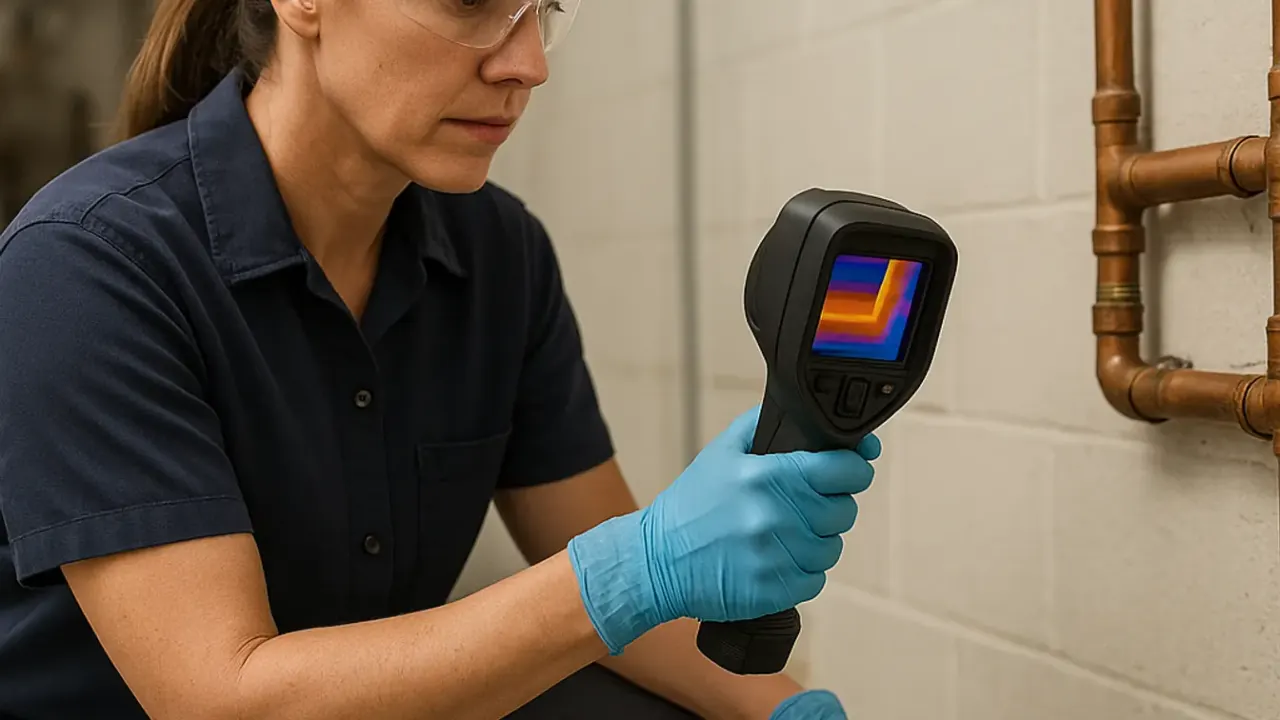
Full system isolation
We shut the main and separate the house supply, irrigation, and pool plumbing so each system is tested on its own. This prevents false readings and tells us which run is actually losing water.
Every locate starts with system isolation and ends with a pressure test. What we include is the diagnosis, the evidence, and a repair plan. Add-ons like slab access, drywall repair, or full line replacement are quoted separately once we know the scope.
We shut the main and separate the house supply, irrigation, and pool plumbing so each system is tested on its own. This prevents false readings and tells us which run is actually losing water.
We sweep the suspect line with an acoustic listening disc, ultrasonic detector, and FLIR thermal camera. You get a marked location and a photo of the reading before we open anything.
After the repair, we re-pressurize the line and hold it on a gauge for 30 minutes. You get a written summary of the failure, the repair, and the test result for your records.
We repair with the correct material for the pipe: copper, PEX, CPVC, or PVC. Fittings are IAPMO-certified, and we pull City of Santa Ana building permits when the scope requires it.
Pipe Leak Detection in santa ana is a diagnostic service that pinpoints where water is escaping from a pressurized supply line, drain line, or irrigation run. We start by isolating the system with ball valves and shut-off valves, then pressurize each zone with a hydrostatic test kit or pressure testing gauge. An acoustic listening disc or ultrasonic leak detector picks up the hiss of water through soil or slab, and a thermal imaging infrared camera confirms the temperature signature. Once we mark the spot, we open only what we must and repair it.
Most calls we run in santa ana start with a high water bill, a warm patch on the floor, or a moisture meter reading that will not dry out. Homes built in the 1950s and 1960s around Floral Park and Washington Square often have original copper pipe that has thinned to a pinhole leak. Newer builds with PEX tubing can still fail at a fitting. If you need leaking pipe detection Santa Ana homeowners trust, we can usually tell you within an hour whether the problem is under the slab, behind a wall, or in the yard.
Five steps, one visit in most cases. You get a clear answer and a fixed price before we open a wall or break concrete.
Schedule
Call or book online — a real human picks up and confirms a 2-hour arrival window.
Diagnose
Licensed tech inspects on-site, then walks you through the cause and your options.
Fix
The job is completed to code and done right the first time — no shortcuts, no surprises.
Guarantee
Every job backed by a written workmanship warranty — and we stand behind it.
Acoustic listening disc
Picks up the sound of water escaping under pressure through soil, slab, or drywall. It narrows the search area before we open anything.
FLIR thermal imaging infrared camera
Reads temperature differences that leaking hot or cold water creates in floors and walls. Gives you a photo of the evidence.
Ultrasonic leak detector
Senses high-frequency sound from a pinhole or fitting leak that the ear cannot hear. Useful for confirming a suspect spot.
Hydrostatic test kit and pressure gauge
Pressurizes a line to a set pressure and holds it. If the gauge drops, the line is losing water and we keep searching.
Pipe and line locator
Maps buried runs under slab and yard so we know exactly where the pipe sits before we dig or cut.
Tracer gas detector
Sewerin and INFICON units read a harmless tracer gas introduced into the line. Best for faint leaks that acoustic gear misses.
Pipeline inspection camera
RIDGID and General Pipe Cleaners cameras check drain and sewer lines for root intrusion, cracks, and offset joints.
Zone isolation and pressure testing
We separate the house supply, irrigation, and pool plumbing, then pressurize each zone on its own. This tells us which system is losing water and rules out false positives from fixtures or valves.
Acoustic and thermal cross-check
We never trust a single tool. A thermal reading is confirmed with an acoustic disc, and vice versa. Two independent signals pointing at the same spot is what we call a located leak.
Tracer gas confirmation
For faint leaks under slab or deep soil, we introduce tracer gas into the line and read it at the surface with a Sewerin or INFICON detector. It is the most reliable way to confirm a buried leak before digging.
Post-repair pressure hold
After the repair, we re-pressurize the line and hold it for 30 minutes. If the gauge does not move, the repair is good. If it drops, we keep working until it holds.
01
What we do: We isolate the house supply from irrigation and pool lines, then pressure-test each run. Acoustic and thermal tools narrow the loss to a specific section. If it is a pinhole leak in copper, we repair that section and re-test.
→ You get a located leak, a same-day repair, and a pressure test proving the line holds. Most customers see the bill normalize the next cycle.
02
What we do: We confirm a hot-water slab leak with a FLIR thermal camera and an acoustic listening disc. Once marked, we open one small access point, repair the line, and pressure-test it. The concrete is restored after the test holds.
→ The hot spot is gone, the slab is dry, and the line holds pressure. You avoid the foundation damage that comes from letting it run.
03
What we do: We pressure-test the return and skimmer lines and isolate the equipment pad. If the leak is underground, we use acoustic gear to pinpoint it before any digging. Dye testing confirms shell leaks at the fittings.
→ You know exactly where the pool is losing water and what it takes to fix it. Most plumbing leaks are repaired in one visit.
04
What we do: We schedule around your operating hours and isolate the building supply. Thermal imaging and acoustic locating find the break without shutting down the whole property. We document the locate for your property records.
→ The leak is located and repaired with minimal disruption, and you have a written record for the file.
santa ana sits on a mix of older housing stock and newer infill, and that shapes how we find leaks. Mid-century homes around Floral Park, French Park, and Washington Square often have original copper pipe that has thinned from decades of hard water. We see pinhole leaks and slab leaks in those tracts regularly. Newer builds with PEX tubing and CPVC pipe usually fail at a fitting or crimp ring rather than mid-run. Our climate matters too: santa ana runs hot and dry most of the year, so soil shifts as it expands and contracts, stressing underground lines and irrigation runs. That is why pipe leak detection under slab Santa Ana CA calls spike after a dry summer. We work to California Plumbing Code and Uniform Plumbing Code standards, pull City of Santa Ana building permits when the scope requires it, and coordinate with Orange County Water District regulations on main line work. If you need a pipe leak inspection Santa Ana California homeowners can schedule same-day, call 714-844-9877.
Floral Park
Many homes here date to the 1920s and still have original copper supply lines. Pinhole leaks at soldered joints are common, and we locate them with acoustic gear before opening a wall.
Washington Square
Mid-century tract homes with slab-on-grade construction. Hot-water slab leaks show up as warm patches on the floor, and thermal imaging finds them fast.
South Coast Metro
A mix of commercial and residential buildings. We schedule commercial locates around operating hours and document the findings for property managers.
Lacy
Older homes with mature landscaping. Root intrusion into sewer laterals and irrigation line failures are common calls here.
Hard water and aging copper
Mineral buildup thins copper from the inside, leading to pinhole leaks. We see this most in homes built before 1970 and locate it with acoustic and thermal tools.
Hot, dry summers and soil movement
Expanding and contracting soil stresses buried lines and irrigation runs. Underground leak detection calls rise in late summer and fall when the ground shifts.
Slab-on-grade construction
Many santa ana homes sit on slab, so a supply leak runs under concrete. Acoustic and thermal locating lets us find it without breaking up the whole floor.
Most calls come down to water going somewhere it should not. Here are the failures we see most often and what happens if they are ignored.
Problem
A hidden leak can waste hundreds of gallons a week and push you into a higher tier. Over a few months, that is real money and a lot of wasted water.
Our Fix
We isolate the supply, irrigation, and pool systems, then pressure-test each one. Acoustic and thermal gear narrows the loss to a specific run so you are not guessing. Most hidden leaks are found and repaired in one visit.
Problem
A hot spot usually means a hot-water slab leak. Left alone, the water erodes soil under the foundation and can lead to foundation cracks and uneven floors.
Our Fix
We confirm the leak with a thermal camera and acoustic disc, then mark the slab. One small access point is usually enough to reach the line. We repair the copper or PEX run and pressure-test it before restoring the surface.
Problem
Moisture inside a wall feeds mold growth and rots the bottom plate. By the time you smell it, the leak has often been running for weeks.
Our Fix
We locate the leak with a moisture meter and thermal camera before opening the wall. One small access panel at the marked spot is all we need. After the repair, we re-check moisture readings to confirm the wall is drying.
Problem
That is a live leak on the pressurized side. It could be the main, a branch line, or an irrigation zone, and it will not stop on its own.
Our Fix
We shut the main and test each zone with a pressure gauge. A pipe and line locator maps the run, and acoustic gear finds the break. You get a located leak and a repair plan the same day.
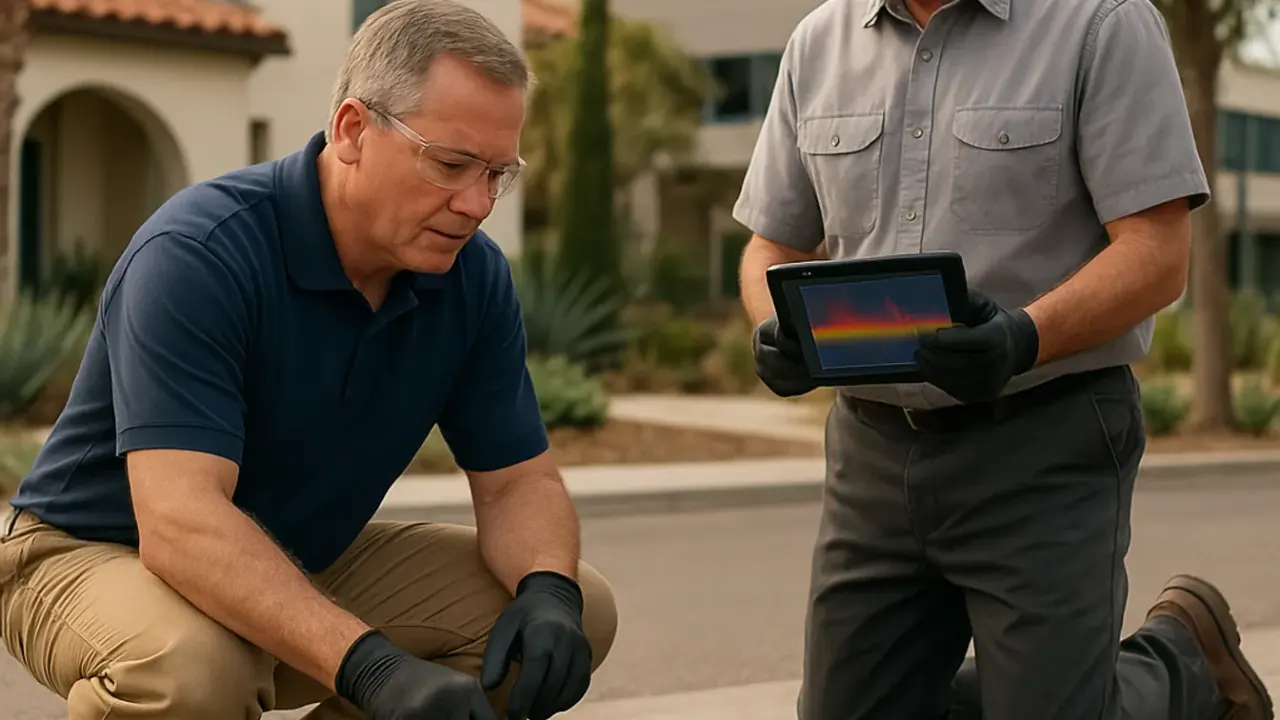
We locate the leak, show you the evidence, and fix it the same visit whenever parts allow. No guesswork, no tearing out drywall to hunt.
Non-invasive locating first
We use acoustic and thermal tools before any cutting. On a typical slab leak, that means one small access point instead of three exploratory holes. You get a marked location, a photo of the thermal reading, and a repair plan in plain language.
Stop the water damage clock
A pinhole leak in a copper line can push out several gallons a day inside a wall. Left alone, that moisture feeds mold growth and rots bottom plates. We find it, stop it, and dry-test the repair so you are not chasing a second leak next month.
Protect your water bill
A hidden underground irrigation leak or water main leak can add hundreds of gallons to your usage. We isolate the irrigation drip tubing and pool lines from the house supply, so you know exactly which run is losing water and how much.
Code-correct repairs
Every repair we make follows the California Plumbing Code and Uniform Plumbing Code. We use SharkBite, Viega, or Uponor fittings rated for the pipe material, and we pull City of Santa Ana building permits when the scope requires it.
Google ★★★★★4.9
Found a slab leak in our hallway in under an hour. They showed us the thermal image and marked the spot before cutting. One small hole, repaired the same day, and the pressure test held. Fair price and no upselling.
Yelp ★★★★★4.8
We had a musty smell in the bedroom wall. Their tech used an acoustic wand and a moisture meter to narrow it down without tearing up the room. One access panel, pinhole leak fixed, and the smell was gone in a week.
BBB ★★★★★4.9
Called at 11 p.m. with water coming through the ceiling. They talked us through shutting the main and had a tech out within the hour. Located a burst copper line and repaired it. Professional and calm under pressure.
Planet Plumbing is a state-licensed plumbing contractor operating under a California C-36 Plumbing Contractor License and CSLB registration. Our technicians train on RIDGID pipeline inspection cameras, General Pipe Cleaners drain cameras, Fluke moisture meters, and Milwaukee Tool inspection gear. We work to California Plumbing Code and Uniform Plumbing Code standards, and we hold backflow tester certification for the assemblies we touch. Local experience covers slab leaks in mid-century tracts, pinhole leaks in copper, and irrigation failures in older yards across Orange County.
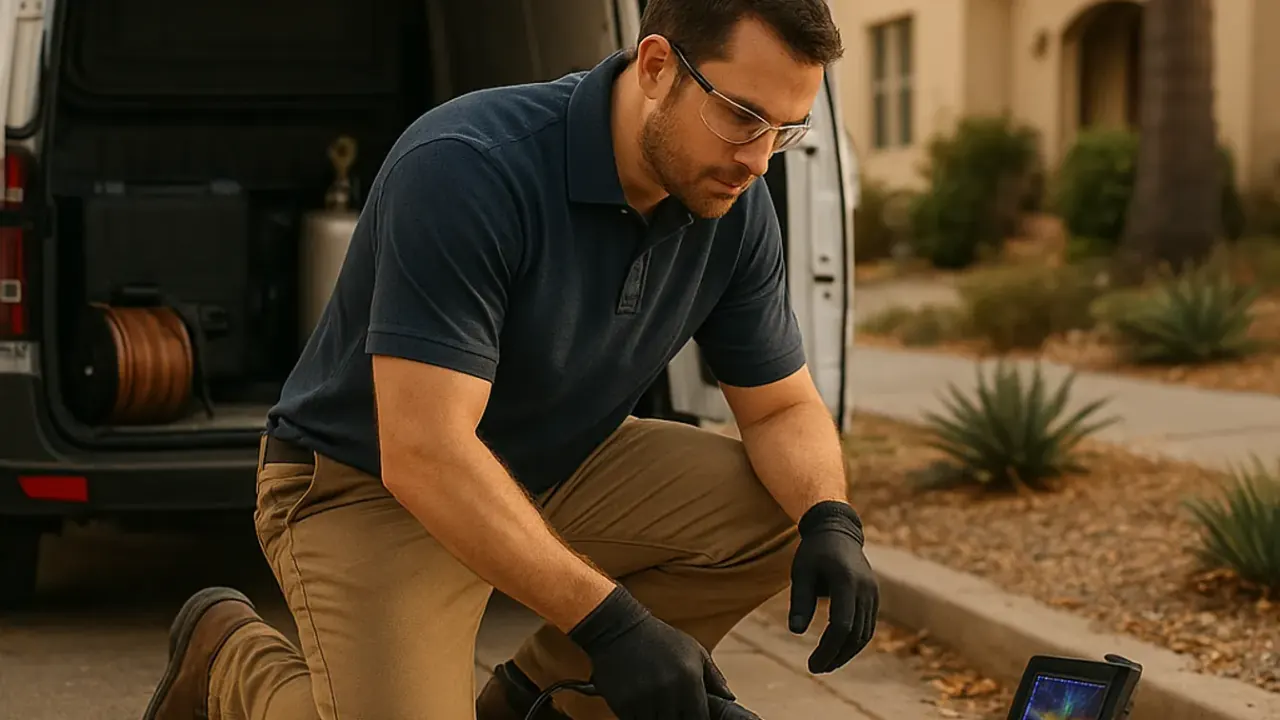
Real answers to the questions we hear most often from local homeowners and property managers.
Our core diagnostic service covers the whole property, not just pipes. If you are not sure whether the loss is supply, drain, or irrigation, this is where we start. We isolate each system and test it with pressure gauges and acoustic gear.
View Leak DetectionWater leaks show up as high bills and damp spots. We trace the loss from the meter forward, checking the main, the fixtures, and the yard lines. Most santa ana calls end with a located break and a same-day repair quote.
View Water Leak DetectionA slab leak is a pipe failure under your foundation. We use acoustic listening discs and thermal cameras to find it without breaking up the whole floor. One small access point is usually enough to reach the damaged section.
View Slab Leak DetectionIf your pool loses water faster than evaporation explains, the leak is in the shell, the plumbing, or the equipment pad. We pressure-test the pool lines and isolate the skimmer and return runs to find the loss.
View Pool Leak DetectionSewer leaks show up as soggy patches, odors, or repeat backups. We run a pipeline inspection camera to check for root intrusion, cracked joints, and offset pipe. That tells us whether you need a spot repair or a larger fix.
View Sewer Line Leak DetectionA gas smell is a safety call, not a wait-and-see. We use a tracer gas detector and electronic sniffers to find the source, then isolate the line. If the leak is at a fitting or valve, we repair it to code before restoring service.
View Gas Leak DetectionCall us at 714-844-9877 or email info@planetplumbing.com. We answer the phone 24/7 for emergencies and schedule same-day appointments for most leak detection calls in Santa Ana. Our office is at 1234 W 1st St, Santa Ana, CA 92703. We look forward to helping you.
Phone
7148449877Address
1240 S Wright St, Santa Ana, CA 92705
Hours
Mon–Fri: 7AM – 7PM
Sat: 8AM – 4PM
Sun: Emergency Only
24/7 Emergency Available