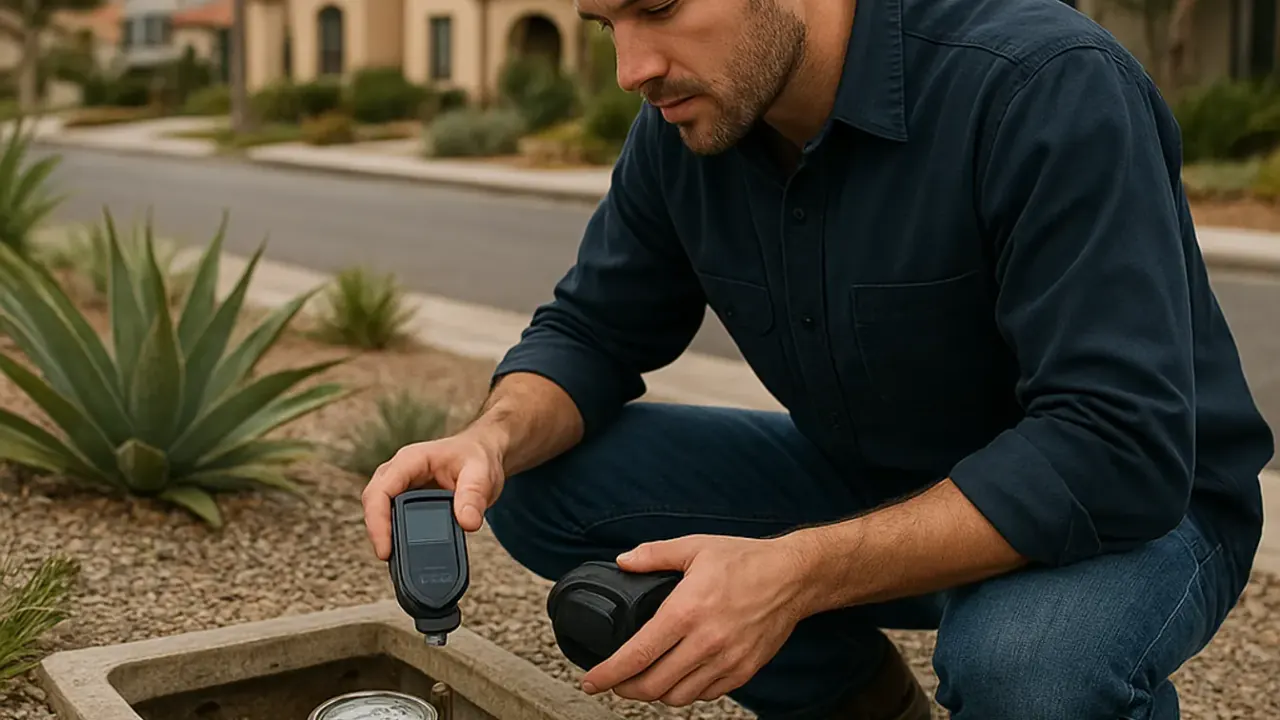
A high Santa Ana water bill is almost always caused by one of five things: a running toilet flapper, a leaking irrigation valve, a slab leak under the foundation, a failed pressure regulator, or a billing change tied to your tier usage. If your bill jumped more than 30 percent month over month and nobody in the house changed their habits, you are paying for water that is going somewhere you cannot see.
We run these calls every week across Santa Ana, and the pattern is consistent. This post walks through what a normal bill looks like here, how to test for a leak in about 20 minutes, and the point where a DIY check stops being useful and leak detection Santa Ana CA becomes the cheaper option.
What a normal Santa Ana water bill actually looks like
The average water bill in Santa Ana California runs roughly $70 to $95 per month for a household of four, depending on tier and season. Santa Ana's water comes through the city utility, and rates are tiered, so the first block of usage is cheap and everything above it climbs fast.
That tier structure is why a small leak hurts more than people expect. A toilet that runs continuously can push a household from the second tier into the third, where the per-unit cost can be two to three times higher. A leak that wastes 200 gallons a day does not just add 200 gallons of cost. It drags your entire usage into a more expensive bracket.
Two other things move the number legitimately. Summer irrigation in Santa Ana can add $40 to $120 a month on its own, and rate adjustments take effect in most years. So before you assume a leak, compare the same month last year, not last month.
Why is my Santa Ana water bill so high? The five causes we find most
Why is my Santa Ana water bill so high is the question we hear on nearly every first call, and in our experience the answer is one of these five, in roughly this order of frequency.
1. A running toilet
A worn flapper lets water trickle from the tank into the bowl 24 hours a day. You will not hear it. You will not see it. A bad flapper wastes 30 to 200 gallons per day, which is $15 to $90 a month at Santa Ana rates. This is the single most common cause of a water bill spike we find, and it is also the cheapest to fix.
2. Irrigation and sprinkler leaks
Santa Ana yards run on automatic timers, and a cracked lateral line or a stuck valve can dump hundreds of gallons into the soil overnight. If your bill climbs in spring and summer but drops in winter, irrigation is the likely culprit. A stuck valve running a single zone for six hours can use more water than your entire household does in a day.
3. Slab leaks
Santa Ana has a lot of older housing stock with copper supply lines running under the slab. Copper pinhole leaks are common in homes built before 1990, and they get worse as the pipe ages. A slab leak can waste 10,000 to 60,000 gallons a month before it ever surfaces as a wet spot on the floor. If you hear water running when everything is off, or a section of floor stays warm, that points under the slab.
4. A failing pressure regulator
Santa Ana sits in a service area where street pressure can run 80 to 120 psi. A house should be regulated down to 50 to 60 psi. When the regulator fails, high pressure stresses every joint and fixture in the house and accelerates leaks at the weakest point. We check pressure on every leak call because it is often the root cause behind the third or fourth leak in the same home.
5. Meter or billing issues
Rare, but real. A meter can read high after a repair, and a leak on the city side of the meter is the city's responsibility, not yours. If your usage number is impossible, call the utility before you call anyone else.
How to check for a leak with a high water bill
How to check for a leak with a high water bill comes down to one test that takes about 20 minutes and costs nothing. Do it when the house is quiet and nobody is using water.
- Shut off every fixture, appliance, and irrigation zone. No dishwashers, no laundry, no ice makers.
- Find your water meter, usually in a concrete box near the sidewalk.
- Write down the reading, including the low-flow dial or triangle if your meter has one.
- Wait 20 minutes without using a drop of water.
- Read the meter again.
If the number moved, you have a leak. If the low-flow indicator spun, you have a leak even if the main digits barely moved. That indicator is designed to catch exactly this kind of slow loss.
From there, isolate the source. Shut the valve at each toilet and recheck the meter. If it stops, the toilet is your leak. If it keeps moving, shut off the irrigation main and recheck. If it still moves with everything isolated, the leak is in the supply lines inside the house or under the slab, and that is where a water leak detection Santa Ana CA visit saves you from tearing up the wrong floor.
Santa Ana water bill high, no leak found: what that usually means
A Santa Ana water bill high with no leak found usually means the leak is hidden, intermittent, or on the wrong side of the meter. We see all three.
Hidden leaks are the most common. A slab leak under a tile floor, a pinhole in a wall cavity, or a break in the line between the meter and the house will not show water anywhere you can see. The meter test proves the loss exists. Finding the exact point takes acoustic listening equipment, thermal imaging, or pressure isolation on each branch of the plumbing.
Intermittent leaks are the second case. A toilet flapper that only fails at night, or an irrigation valve that sticks once a week, will not show up on a single 20-minute test. Run the meter test twice, once in the morning and once after everyone is asleep.
The third case is a leak on the city side. The meter box itself, the city lateral, and the main are the utility's responsibility. If the meter spins with your house valve fully closed, that loss is not on your plumbing, and you should call the city before you spend money on a contractor.
One more possibility worth ruling out: a softener or whole-house filter that is backwashing on a stuck cycle. We have found units regenerating every few hours, quietly burning through 50 gallons a cycle.
What to watch out for
The biggest mistake we see is homeowners waiting two or three billing cycles before acting. A slab leak does not heal. It grows, and by the time it surfaces, you are looking at a wet floor, a lifted tile, or a mold problem on top of the plumbing repair.
The second mistake is guessing at the location. Cutting into a floor to find a leak without detection equipment is a coin flip. We have seen homeowners open three holes in a slab before finding a leak that a thermal camera would have located in 15 minutes.
Other things to avoid:
- Replacing a water heater or fixtures when the real problem is system pressure.
- Assuming a high bill is normal because it is summer, when the irrigation timer is actually stuck.
- Ignoring a warm spot on the floor. That is a hot water slab leak, and it is the easiest one to confirm.
- Paying a contractor to dig before anyone has run a meter test or a pressure test.
If you are in one of Santa Ana's older neighborhoods, the age of the plumbing matters more than the age of the house. Homes in leak detection in Floral Park and similar historic pockets often still have original copper under the slab, and those lines are at the top of the failure curve right now.
When to call a professional
Call a leak detection professional when the meter test shows loss with every fixture and irrigation zone shut off, when you have a warm or wet spot on the floor, or when your bill has climbed for two consecutive cycles with no explanation.
Those three signals mean the leak is not something you can find with a flashlight. Our team at Planet Plumbing uses acoustic listening, thermal imaging, and pressure isolation to pinpoint the leak before anyone picks up a tool. We find it, we fix it, and we test the line before we leave.
If your home is on a slab, the stakes are higher. An undetected slab leak can undermine flooring and drywall over months. That is the point where slab leak detection Santa Ana CA is worth the call rather than waiting for the next bill.
Frequently Asked Questions
Why is my water bill high in Santa Ana CA?
The most common causes are a running toilet flapper, a leaking irrigation valve, a slab leak, or a failed pressure regulator. Tiered Santa Ana rates make even a small leak expensive because it pushes your whole usage into a higher bracket.
How do I know if my high water bill is from a leak?
Shut off every fixture and irrigation zone, then read your meter twice, 20 minutes apart. If the reading moves, you have a leak. If the low-flow indicator spins, the leak is confirmed even when the main digits barely change.
Does a running toilet raise my water bill in Santa Ana?
Yes, significantly. A worn flapper wastes 30 to 200 gallons per day, which adds roughly $15 to $90 a month at Santa Ana rates. It is the most common cause of a bill spike we find, and the cheapest to repair.
What is the average water bill in Santa Ana California?
Most single-family households pay about $70 to $95 a month. Summer irrigation can add $40 to $120, and homes in higher tiers pay two to three times more per unit above the base block.
Will a leak detection visit tell me where the leak is before anyone digs?
Yes. Acoustic listening, thermal imaging, and pressure isolation pinpoint the leak location on the first visit. That means we open one section of floor or wall instead of three, and you get a repair plan the same day.
Get help with leak detection in Santa Ana
If your bill has climbed and the meter test says water is moving, we can find the source and stop the loss. Call Planet Plumbing at 714-844-9877 and we will schedule a leak inspection at your Santa Ana home.